How much does pakistani food London usually cost?
How much does pakistani food London usually cost?
Pakistani food in London spans simple street snacks to lavish charcoal platters, and prices move in clear tiers. A bun kebab from a counter in Whitechapel may cost only a few pounds, while a full mixed grill near tourist landmarks can be several times higher. Knowing how neighbourhood, service style, and protein factor into the bill helps you plan a meal that suits your appetite and budget.
What affects the price
Location is the first lever. Restaurants in central London pay premium rents, so even a quick plate often costs more than the same dish in areas with large South Asian communities such as Whitechapel or Ilford. Service style matters as well. Counter ordering is cheaper than table service, and takeaway discounts are common. Finally, meat choice makes a difference. Lamb on the bone, slow cooked beef, or seafood push the total up, while vegetarian plates and chicken based curries sit lower. Charcoal grilling, which demands extra time and fuel, also commands a supplement.
When you compare Pakistani dishes with nearby Indian food, the two cuisines share similar ranges for breads and basic curries, but prices diverge for regional specialties and grilled platters. Most Pakistani kitchens are fully halal, which helps diners who prefer clear certification without checking dish by dish.
Street snacks and quick lunches
Casual snacks usually start around four pounds and rarely exceed seven. Samosa chaat, pani puri, bun kebab, and small seekh orders all fit this bracket. Order at the counter for the lower end, or sit down for the higher end.
Rolls and wraps aimed at lunch traffic run from five to nine pounds. A chicken seekh rolled in warm paratha, or an aloo tikki wrap with chutney, will satisfy most students and office workers. Sharing two different rolls with salad is a cost friendly way to sample variety.
Hearty mains
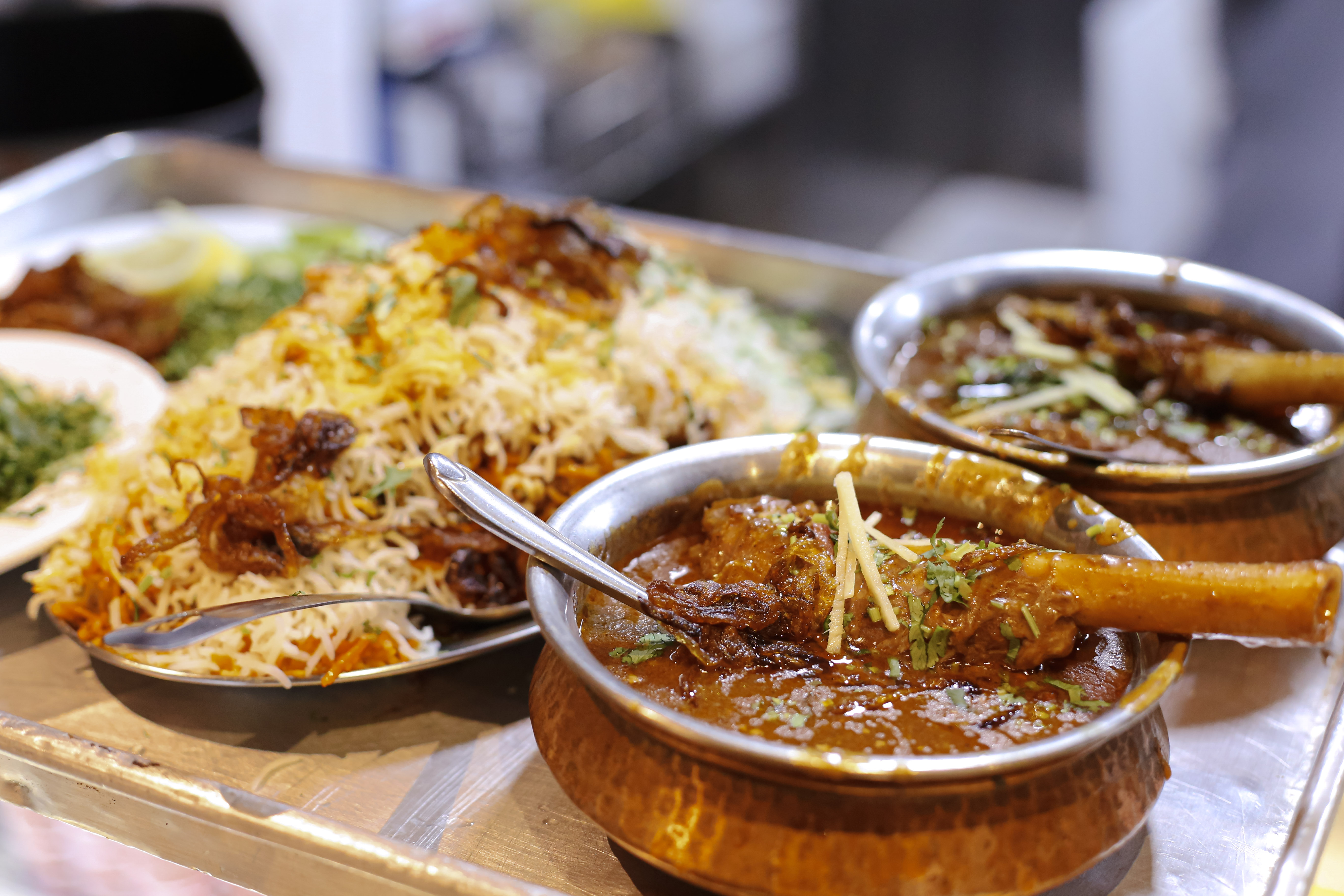
Biryani shows the widest spread. A generous chicken biryani often lands between eight and twelve pounds. Switch to lamb or prawns and the figure climbs to fourteen or more. Some restaurants offer family trays priced per kilogram, letting groups reduce the per person spend.
Curries such as chicken karahi, chicken qorma, and daal generally begin at nine pounds. Lamb or beef versions move into the mid teens. Slow cooked staples like haleem and nihari fall between eleven and eighteen pounds, reflecting both cooking time and the richness of the meat. One order, paired with fresh naan, can satisfy two light eaters.
Charcoal grilled BBQ is popular and priced accordingly. A single seekh or leg of chicken tikka costs five to nine pounds, while mixed grills for two range from eighteen to thirty, depending on how many kebab varieties appear on the platter. Remember to add a couple of pounds if you want extra salad and bread.
Bread, sides, and sweets
Fresh naan usually costs between one pound fifty and three pounds, depending on size and toppings such as garlic or sesame. Flaky parathas sit at two to four pounds. Simple sides like raita or chutney add one or two pounds yet can stretch a curry across more bread.
Chai is typically two or three pounds. Sweet or salted lassi range from three to five. For something colder or richer, falooda or mango milk drinks climb to the upper end. Classic desserts like kheer or zarda cost four to six pounds.
Thoughtful ways to manage the bill
A good rule for two people is to order one hearty curry, two breads, and a raita. This combination delivers flavour and avoids leftovers. If you crave charcoal, start with the small mixed grill. You can always add another skewer if hunger lingers.
Lunch is usually cheaper than dinner because diners move quickly and order fewer courses. Families who need volume often choose a large stew such as haleem and several naan so everyone can spoon from the same bowl. Groups hosting an office party or birthday save money by booking set menus or discussing catering in advance; portions become more predictable and the kitchen can fine tune heat levels to suit mixed palates.
Dilpasand in Whitechapel serves Karachi style street food, biryani, haleem, and generous charcoal platters in a relaxed setting. Exploring a few boroughs is often more useful than scrolling endless delivery apps, because tasting reveals how spice, smoke, and portion size shift from one kitchen to the next. Across London, menus post clear prices and halal labels, so the main question is simple: are you in the mood for a quick roll or a slow cooked stew?